
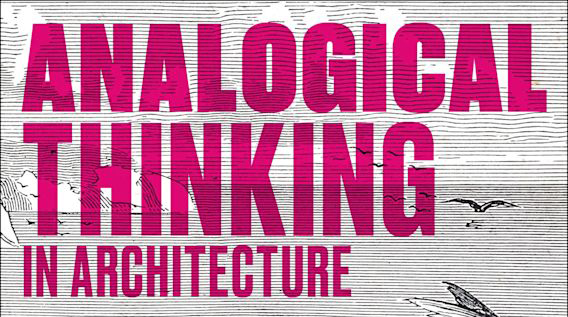
{:fr}Analogical Thinking in Architecture. Connecting Design and Theory in the Built Environment (New York : Bloomsbury Publishing, 2023), un nouveau livre de Jean-Pierre Chupin{:}{:en}Analogical Thinking in Architecture. Connecting Design and Theory in the Built Environment (New York: Bloomsbury Publishing, 2023), a new book by Jean-Pierre Chupin{:}
{:fr}Ce livre propose une exploration approfondie de l’utilisation riche et persistante de la pensée analogique dans l’environnement bâti. En comparant les points de vue sur le rôle des analogies et des métaphores exprimés par d’éminentes personnalités de l’architecture et des disciplines connexes du XVIIe siècle à nos jours, ce livre montre comment le « monde analogique du projet » se révèle être un champ largement ouvert d’interactions créatives et cognitives.{:}{:en}This book provides an in-depth exploration of the rich and persistent use of analogical thinking in the built environment. Comparing views on the role of analogies and metaphors by prominent voices in architecture and related disciplines from the 17th century to the present, the book shows how the “analogical world of the project” is revealed as a wide-open field of creative and cognitive interactions.{:}
{:fr}[vc_row][vc_column][vc_column_text css= » »]
Description
Ce livre propose une exploration approfondie de l’utilisation riche et persistante de la pensée analogique dans l’environnement bâti. Depuis le début du XXIe siècle, la « pensée du design » a pénétré de nombreux domaines en dehors des disciplines du design, utilisée chaque fois que les frontières disciplinaires doivent être transcendées afin de penser « hors des sentiers battus ». Ce livre soutient que ces qualités ont longtemps été soutenues par la « pensée analogique » – une manière agile de raisonner dans laquelle nous pensons à l’inconnu à travers le familier.
Le livre est organisé en quatre études de cas : la première passe en revue les modèles analogiques qui ont été au cœur des représentations de la pensée du design depuis les années 1960 jusqu’à aujourd’hui ; la deuxième étudie la persistance des analogies biologiques ; la troisième explore l’imaginaire paradoxal des « villes analogues » comme moyen d’intégrer l’architecture contemporaine dans des contextes patrimoniaux ; tandis que la quatrième analyse le potentiel critique et théorique des métaphores linguistiques et des comparaisons visuelles dans le discours sur l’architecture.
En comparant les points de vue sur le rôle des analogies et des métaphores exprimés par d’éminentes personnalités de l’architecture et des disciplines connexes du XVIIe siècle à nos jours, ce livre montre comment le « monde analogique du projet » se révèle être un champ largement ouvert d’interactions créatives et cognitives. Montrant comment l’analogie a le pouvoir de réconcilier la conception et la théorie, il s’agit d’un ouvrage incontournable tant pour les concepteurs que pour les théoriciens.[/vc_column_text][/vc_column][/vc_row][vc_row][vc_column][mvc_advanced_button align= »center » btn_text= »ACCÉDER AUX INFORMATIONS DE CE LIVRE » btn_block= »btn_block » google_fonts= »font_family:Open%20Sans%3A300%2C300italic%2Cregular%2Citalic%2C600%2C600italic%2C700%2C700italic%2C800%2C800italic|font_style:700%20bold%20regular%3A700%3Anormal » btn_url= »url:https%3A%2F%2Fwww.bloomsbury.com%2Fca%2Fanalogical-thinking-in-architecture-9781350343634%2F|target:_blank » btn_clr= »#ffffff » btn_bg= »rgba(114,114,128,0.77) » btn_hvrclr= »#ffffff » btn_hvrbg= »#727280″ btn_radius= »4″][vc_empty_space][/vc_column][/vc_row][vc_row][vc_column][vc_column_text css= » »]
Auteur
Jean-Pierre Chupin est professeur à l’École d’architecture de l’Université de Montréal, où il est titulaire de la Chaire de recherche du Canada en architecture, concours et médiations de l’excellence.[/vc_column_text][/vc_column][/vc_row][vc_row][vc_column][vc_column_text css= » »]
Recensions
Analogical Thinking in Architecture est une étude minutieuse et opportune de l’analogie en tant qu’outil puissant pour relier la conception et la théorie dans l’environnement bâti. Chupin présente un argument convaincant sur le potentiel de la pensée analogique à renouveler les horizons épistémologiques de la théorie architecturale et à contribuer à une meilleure compréhension de la pratique contemporaine de la conception. Rédigé avec éloquence et truffé d’exemples pertinents, cet ouvrage est une lecture incontournable pour tous les étudiants en architecture, les enseignants en design et les praticiens.
Albena Yaneva, University of Manchester, UK
L’un des plus grands spécialistes de l’analogie, cette dimension fondamentale de la pensée architecturale nous offre une version anglaise élargie de sa contribution séminale à l’étude d’un sujet qui intéresse à la fois les théoriciens et les praticiens. En effet, l’analogie est la clé de la compréhension de la créativité architecturale.
Antoine Picon, Harvard Graduate School of Design, USA
En quatre chapitres, Jean-Pierre Chupin nous entraîne dans un voyage intellectuel et sensoriel, passant en revue les moments clés de la théorie et de l’histoire de l’architecture occidentale et éclairant des modes de pensée qui restent peu explorés dans la discipline. La pensée analogique en architecture est un ouvrage incontournable tant pour les chercheurs que pour les praticiens.
Dieter Dietz, EPFL Lausanne, Suisse[/vc_column_text][/vc_column][/vc_row]{:}{:en}[vc_row][vc_column][vc_column_text css= » »]
Description
This book provides an in-depth exploration of the rich and persistent use of analogical thinking in the built environment. Since the turn of the 21st century, “design thinking” has permeated many fields outside of the design disciplines, used whenever disciplinary boundaries need to be transcended in order to think “outside the box”. This book argues that these qualities have long been supported by “analogical thinking”—an agile way of reasoning in which we think the unknown through the familiar.
The book is organized into four case studies: the first reviews analogical models that have been at the heart of design thinking representations from the 1960s to the present day; the second investigates the staying power of biological analogies; the third explores the paradoxical imaginary of « analogous cities » as a means of integrating contemporary architecture with heritage contexts; while the fourth unpacks the critical and theoretical potential of linguistic metaphors and visual comparisons in architectural discourse.
Comparing views on the role of analogies and metaphors by prominent voices in architecture and related disciplines from the 17th century to the present, the book shows how the “analogical world of the project” is revealed as a wide-open field of creative and cognitive interactions. Showing how analogy has the power to reconcile design and theory, it is a must-read for both designers and theorists alike.[/vc_column_text][/vc_column][/vc_row][vc_row][vc_column][mvc_advanced_button align= »center » btn_text= »ACCESS THIS BOOK’S INFORMATION » btn_block= »btn_block » google_fonts= »font_family:Open%20Sans%3A300%2C300italic%2Cregular%2Citalic%2C600%2C600italic%2C700%2C700italic%2C800%2C800italic|font_style:700%20bold%20regular%3A700%3Anormal » btn_url= »url:https%3A%2F%2Fwww.bloomsbury.com%2Fca%2Fanalogical-thinking-in-architecture-9781350343634%2F|target:_blank » caption_url= » » caption_urls= » » caption_urlss= » » btn_clr= »#ffffff » btn_bg= »rgba(114,114,128,0.77) » btn_hvrclr= »#ffffff » btn_hvrbg= »#727280″ btn_radius= »4″][vc_empty_space][/vc_column][/vc_row][vc_row][vc_column][vc_column_text css= » »]
Author
Jean-Pierre Chupin is a professor at the Université de Montréal School of Architecture, where he holds the Canada Research Chair in Architecture, Competitions and Mediations of Excellence.[/vc_column_text][/vc_column][/vc_row][vc_row][vc_column][vc_column_text css= » »]
Reviews
Analogical Thinking in Architecture is a careful and timely study of analogy as a powerful tool for connecting design and theory in the built environment. Chupin makes a compelling argument about the potential of analogical thinking to renew the epistemological horizons of architectural theory and to contribute to a better understanding of contemporary design practice. Eloquently written and filled with insightful examples, it is a must-read for every architecture student, design educator and practitioner.
Albena Yaneva, University of Manchester, UK
One of the foremost specialists of analogy, this fundamental dimension of architectural thinking, gives us an expanded English version of his seminal contribution to the study of a topic of interest both to theorists and practitioners. Indeed, analogy is key to the understanding of architectural creativity.
Antoine Picon, Harvard Graduate School of Design, USA
In four chapters, Jean-Pierre Chupin takes us on an intellectual and sensory journey, reviewing key moments in Western architectural theory and history and illuminating modes of thought that remain little explored in the discipline. Analogical Thinking in Architecture is a must-read for scholars and practitioners alike.
Dieter Dietz, EPFL Lausanne, Switzerland[/vc_column_text][/vc_column][/vc_row]{:}