











Led by Jean-Pierre Chupin at the Université de Montréal, the Canada Research Chair in Architecture, Competition and Quality (CRC-ACQUA) contributes to raising the bar of quality in the built environment. Research projects, design competitions, critical exhibitions and databases examine the ability of buildings and public spaces to meet citizens’ expectations in terms of equity, social value and sustainability. These issues are addressed through the prism of awards of excellence, lived experience and project competitions, which are understood as epistemological filters and mechanisms for mediating quality.
NEWS
PUBLICATIONS
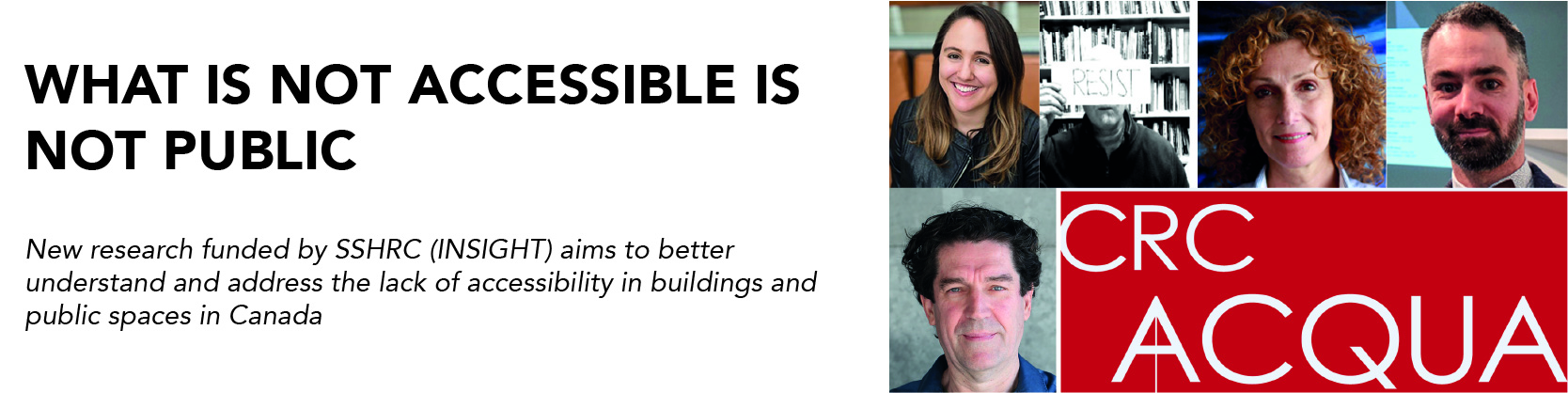
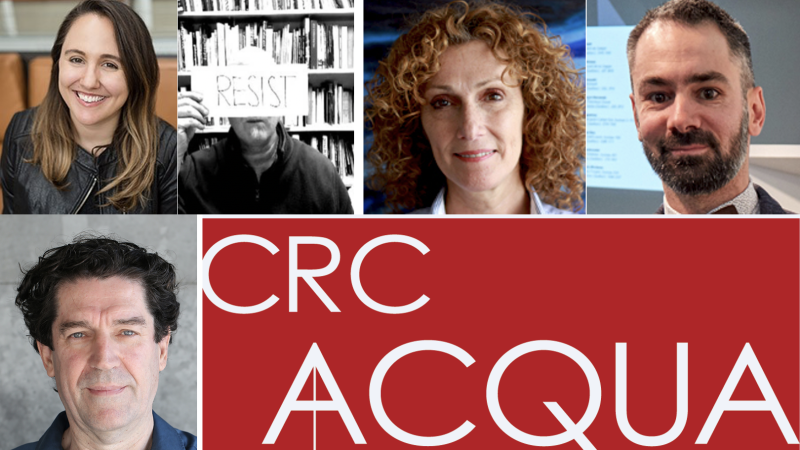
Coordinated by the Canada Research Chair in Architecture, Competition and Quality at the Université de Montréal (Prof. Jean-Pierre Chupin), this project has received $412,000 in funding from the SSHRC’s INSIGHT programme (2026–2031). The interdisciplinary approach brings together researchers in interior design from the University of Montreal (Dr Olivier Vallerand, Prof. Carmela Cucuzzella), in landscape architecture from the University of Toronto (Prof. Rob M. Wright) and in urban planning from Toronto Metropolitan University (Dr Samantha Biglieri).
Summary
It is now clear that not all public buildings will be accessible by 2040, despite the adoption of the Canadian Accessibility Act (SC 2019, ch.10). By perpetuating barriers that effectively exclude people with disabilities, these spaces cannot fulfil their ‘public’ role.
In contrast to the progress made in environmental and sustainability issues, the lack of understanding of the spatial implications of experiences related to disability and special needs remains a major obstacle to educational, practical and policy responses across all disciplines of the built environment. Our previous research has demonstrated how awards for excellence and competitions influence definitions of quality in architecture, interior design, landscape architecture and urban planning.
We hypothesise that competitions and awards still reflect cultural and behavioural biases and do not meet the requirements of the Accessibility Act. Representations of users remain rooted in a worldview where the human body is idealised and standardised by simplistic images from which neurodiversity is conspicuously absent. We propose to make these ideological and procedural barriers explicit by theorising them through a series of comparative analyses of competition entries and awards for excellence in the Canadian context.
Using two databases compiled by our team (the Canadian Competition Catalogue and ArchiQualiData), the research focuses on around forty examples of public spaces at various scales identified within Canadian institutions, such as: cultural buildings, libraries, sports centres, state schools, public parks and civic centres. Paradoxically, these contexts raise questions of accessibility to varying degrees, even though they meet the requirements of current norms and standards. The research involves a qualitative comparative analysis of the projects and theoretical frameworks, as well as an inventory of educational approaches and shortcomings, and the collection of experiences reported by a reference group across four key areas:
Axis 1 (POLICIES) – The issue of accessibility standards as benchmarks for access (Coordinated by Jean-Pierre Chupin and Samantha Biglieri)
Axis 2 (THEORIES) – Rethinking representations and concepts of accessibility through the lens of inclusive quality (Coordinated by Olivier Vallerand and Jean-Pierre Chupin)
Axis 3 (METHODS) – Improving methods for assessing and measuring inclusive quality through lived experience. (Coordinated by Samantha Biglieri and Olivier Vallerand)
Axis 4 (PEDAGOGIES) – Awareness-raising and academic training on behavioural barriers and the social value of barrier-free environments (Coordinated by Professors Carmela Cucuzzella and Rob Wright)
To address this complex phenomenon, the team combines multidisciplinary expertise in the fields of architectural theory, design thinking, gender and queer studies, urban studies and landscape research. Our team has gained international recognition for its work on competitions and awards for excellence. Two grants from the Canada Foundation for Innovation have enabled the establishment of digital documentation infrastructure that will be used for the comparative and qualitative cross-referencing of specialized data available via open access.
This study aims to contribute to a better understanding of the limitations of accessibility norms, standards and policies. It calls for greater awareness in the education of designers, in the training of civil servants responsible for public procurement, and, more generally, in raising awareness among members of competition and award juries across all areas of the built environment.
For more information:
Public Exclusions: Understanding and Addressing the Inaccessibility of Public Buildings and Places in the Canadian Context
Social Sciences and Humanities Research Council of Canada INSIGHT Grant (#435-2026-1072):
Jean-Pierre Chupin, Chaire de recherche du Canada en architecture, concours et qualité
Samantha Biglieri
Olivier Vallerand
Carmela Cucuzzella
Rob M. Wright
PUBLICATIONS
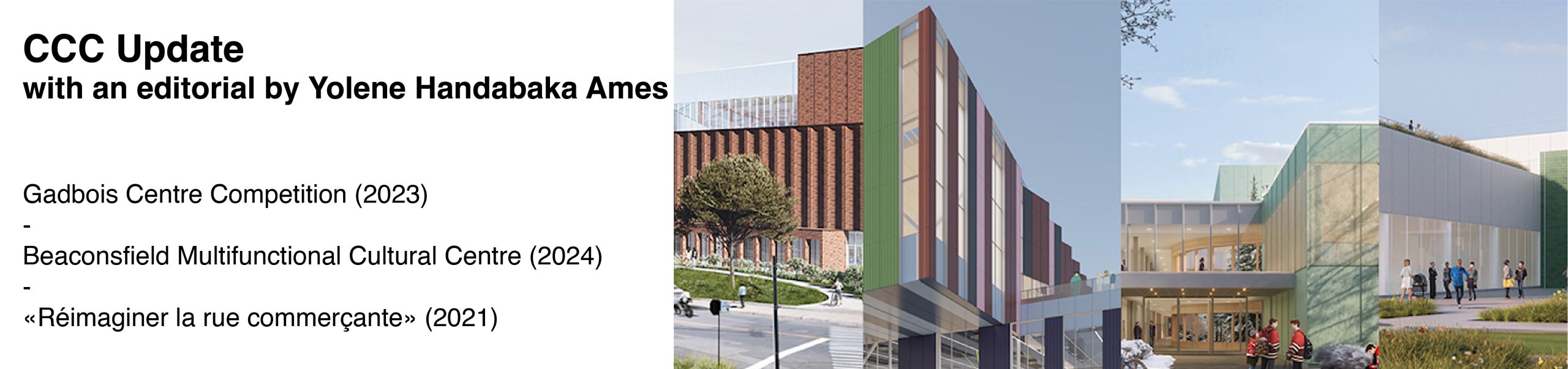
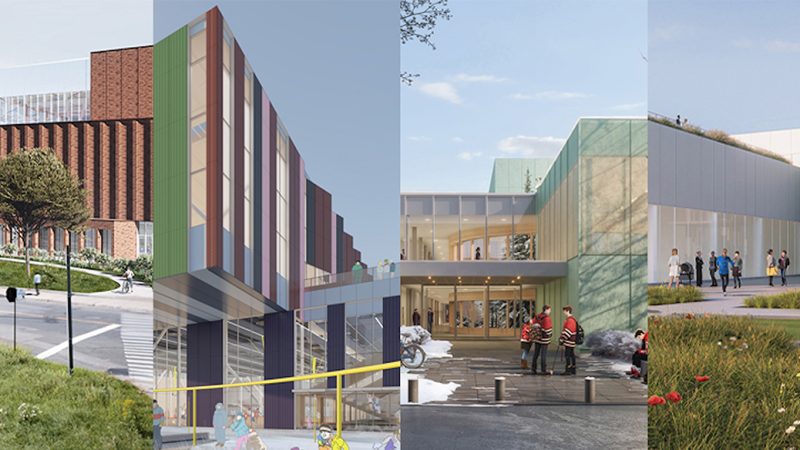
The Canadian Competition Catalog is regularly updated by the Canada Research Chair in Architecture, Competitions, and Quality (CRC-ACQUA) at the University of Montreal. Recent additions include three projects involving cultural centers and urban landscapes, as well as more than forty projects designed in Quebec.
1 – The competition for the Centre Gadbois (2023), won by Prisme + ADHOC Inc.
The Centre Gadbois occupies a paradoxical place in Montreal’s collective imagination. Built in 1960 as part of the city’s effort to make sports accessible to all, it has since been transformed by gradual additions, surviving in the shadow of the Turcot Interchange while serving generations of athletes and citizens. As Montreal reimagined this iconic facility, the design competition for its renovation and partial reconstruction became more than just a technical exercise: it was a reflection on how memory, landscape, and community can be reintegrated into the very fabric of architecture. Thus, the new Centre Gadbois would highlight the heritage elements of the original building, integrate into the surrounding urban fabric, and offer the community better access to sports and recreation.
Excerpt from an editorial by Yolene Handabaka Ames, a doctoral student in architecture at the University of Montreal:
“The objective of the two-stage multidisciplinary architecture competition, launched by the City of Montreal in 2023, was to design the renovation and partial reconstruction of the Centre Gadbois, a building of heritage significance and a major community sports facility located in the Sud-Ouest borough, near the Turcot Interchange and the Lachine Canal National Historic Site.
The competition brief was ambitious. It called for minimal demolition and the restoration of key elements of the 1960 structure, the reorganization of a complex interior, and the creation of a central civic space. Urban integration was essential: the building had to open up to Gadbois Park, the Saint-Pierre woonerf, and the canal, while addressing the negative impacts of the road infrastructure.
The environmental transition was equally central, with LEED Silver certification as the benchmark and broader goals aligned with Montreal’s 2030 Agenda. Beyond the technical aspects, the project was designed to embody inclusivity through the ADS+ principles, ensuring that Gadbois would be accessible to all citizens. »
Yolene Handabaka Ames
Read the editorial...
2 – The competition for the new multifunctional cultural center in Beaconsfield (2024), won by Lemay + Bouthillette Parizeau + Elema
The competition for a new multifunctional cultural center in the City of Beaconsfield is a multidisciplinary architectural competition aimed at providing the municipality with an architectural and public development project that combines a library with spaces to support cultural activities.
Read the competition form...
3 – The “Réimaginer la rue commerçante” Competition (2021), won by Étienne Bernier Architecture + Julien Delannoy
The urban design ideas competition for the redevelopment of Notre-Dame Street in Lachine aims to encourage the submission of innovative proposals that will enrich the discussion on the future of this thoroughfare. The competition results will be compiled into a “book of possibilities” that will serve as a basis for discussion during the consultation process with local stakeholders (residents, merchants, elected officials, civil servants, developers, etc.) to plan the improvements that will be implemented following the infrastructure work scheduled for the coming years.
Read the competition form...
EVENTS
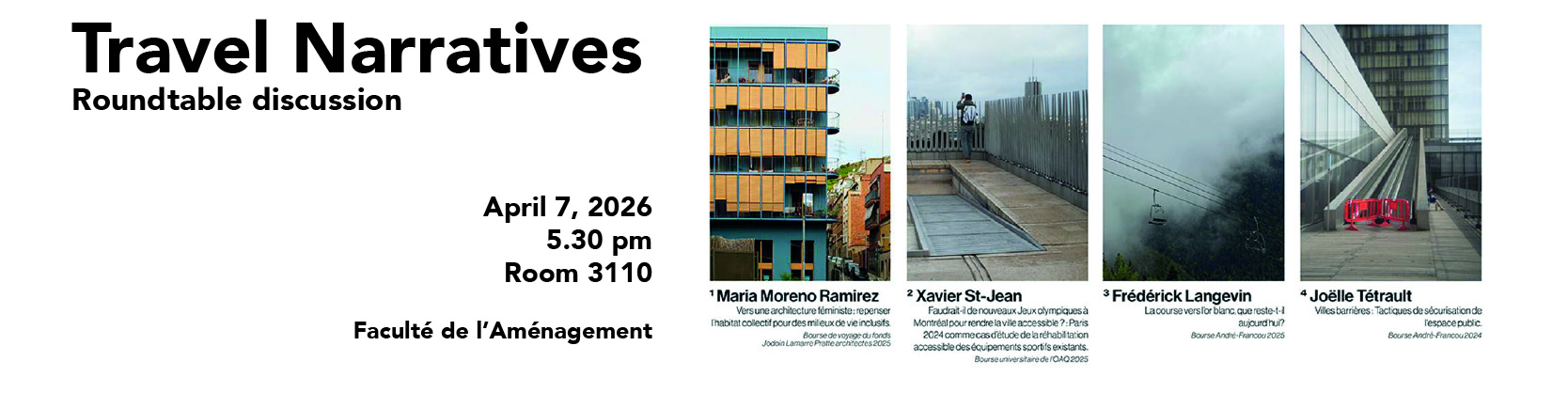
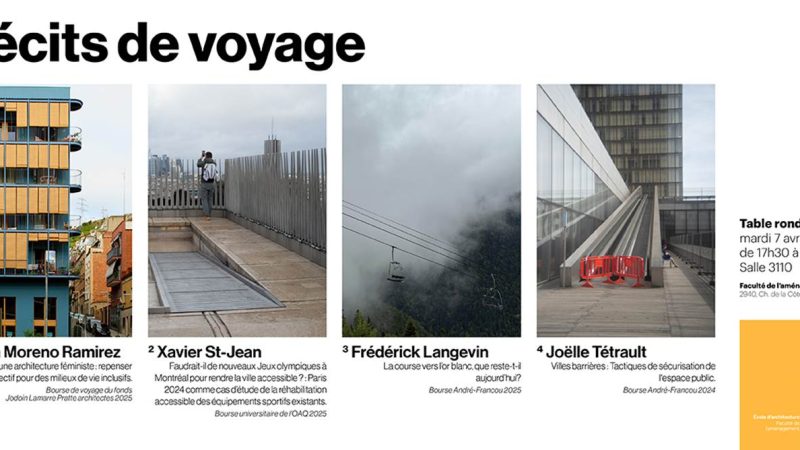
Date: Tuesday, April 7, 2026
Time: 5:30 p.m. to 6:30 p.m.
Location: Room 3110
Event moderated by Paloma Castonguay-Rufino, PhD candidate at the Canada Research Chair in Architecture, Competition, and Quality (CRC-ACQUA) and the Laboratoire d'Étude de l'Architecture Potentielle (LEAP)
Travel narratives serve as tools for capturing the various aspects of the travel experience, as a form of cultural immersion. In the field of architecture, they are accompanied by various means of capturing these experiences through texts, sketches, architectural details, photographs, collages, etc. Thus, the travel narrative allows us to explore a culture and its contexts through a personal and intimate perspective, as well as an architectural vision.
Maria Moreno Ramirez
Vers une architecture féministe : repenser l’habitat collectif pour des milieux de vie inclusifs
Bourse de voyage du fonds Jodoin Lamarre Pratte architectes 2025
Xavier St-Jean, former student member of CRC-ACQUA and LEAP
Faudrait-il de nouveaux Jeux olympiques à Montréal pour rendre la ville accessible ? Paris 2024 comme cas d’étude de la réhabilitation accessible des équipements sportifs existants
Bourse universitaire de l’OAQ 2025
Frédérick Langevin
La course vers l’or blanc, que reste-t-il aujourd’hui ?
Bourse André‑Francou 2025
Joëlle Tétrault, former student member of CRC-ACQUA and LEAP
Titre de la présentation à venir
Bourse André‑Francou 2024
EVENTS
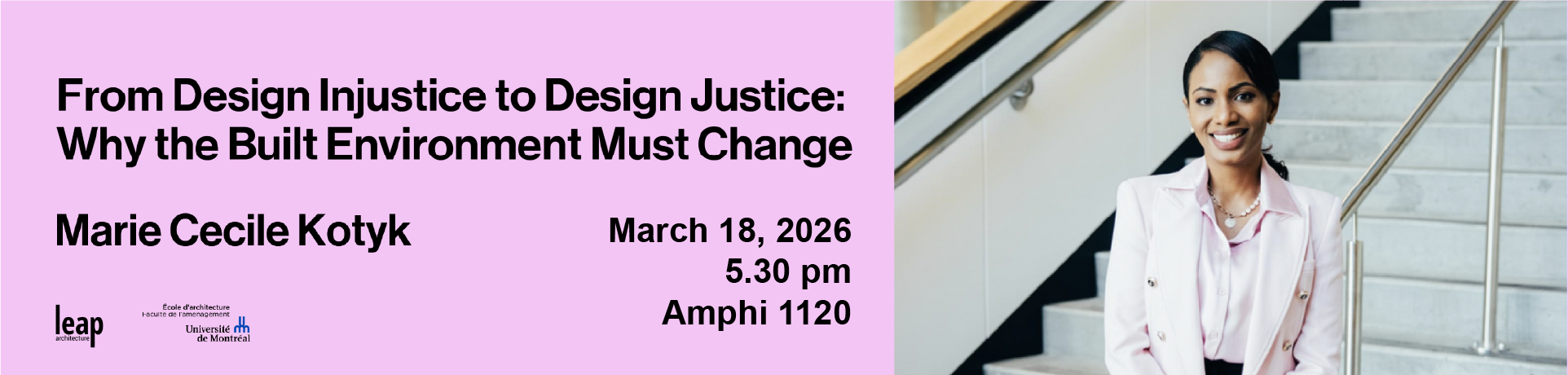
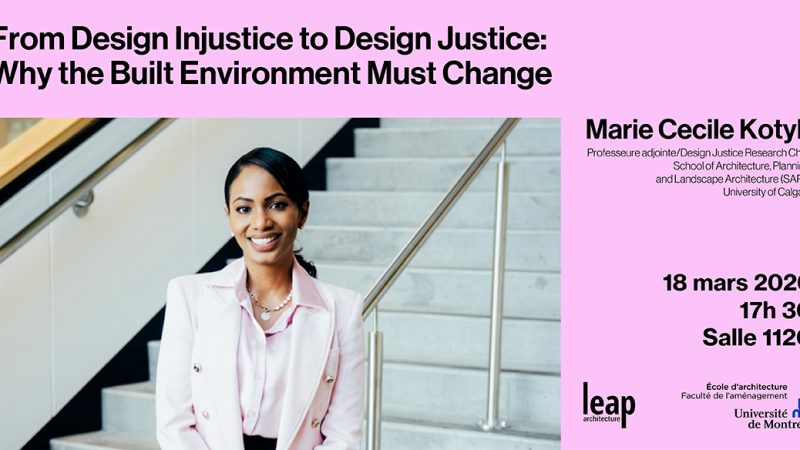
Lecture by Marie Cecile Kotyk, University of Calgary
Date : Wednesday, March 18th at 5.30pm
Location : Université de Montréal, Faculté de l’Aménagement, Amphi 1120
Lecture series of the LEAP and the École d’architecture
Architecture and urban planning have historically produced inequalities, but designing projects from a “spatial justice” perspective makes it possible to envision more equitable, inclusive, and community-oriented built environments.
Design is never neutral. From outright discrimination through urban renewal to hostile architecture and exclusive zoning, the built environment has historically been used to reinforce inequalities in access to housing, safety, mobility, and opportunity. This presentation introduces the concept of “justice through design” as a critical framework for confronting this legacy and transforming the way we plan, design, and govern cities. Historical examples, contemporary case studies, and community initiatives in the areas of housing, public spaces, climate resilience, and education show how design can shift from perpetuating injustice to actively redistributing power. Based on lived experience and participatory practice, the lecture explains why justice in design is not optional, but essential to creating inclusive, equitable, and just communities.
Dr. Marie Cecile Kotyk
Assistant Professor / Design Justice Research Chair
School of Architecture, Planning, and Landscape Architecture (SAPL)
University of Calgary
[vc_column width="1/4"][vc_column width="3/4"]
Marie Cecile Kotyk is an award-winning urban planner, housing professional, and spatial justice researcher with over 15 years of experience promoting equity in the public and nonprofit sectors. As a leading figure in community-based research and spatial justice, her work addresses the systemic forces that produce racial inequalities in the built environment, particularly for Black, Indigenous, and structurally marginalized communities. Her doctoral research led to the creation of the Black Housing Equity Framework, which aims to combat anti-Black racism in housing policy and design. Through her leadership in creating the UDesign Justice initiative at the University of Calgary, Dr. Kotyk is establishing a transdisciplinary center that brings together academics, community members, and practitioners to co-create equity-focused solutions for spatial, social, and systemic transformation.
Contact : Jean-Pierre Chupin, Chaire de recherche du Canada en architecture, concours et qualité (CRC-ACQUA) + Laboratoire d’étude de l’architecture potentielle (LEAP)

PUBLICATIONS
Professor Jean-Pierre Chupin and student Laurène Smith presented UdeM's research on the concept of inclusion in festive activities at the Entretiens Jacques Cartier conference in Lyon.
"Montreal and Lyon are both known as festive cities, hosting multiple events each year. But not everyone has the right to celebrate. “Festivals are places of contradiction. They are celebrations that are supposed to be open to everyone, yet they exclude people,” says Laurène Smith, a master's student in architecture under the supervision of Professor Jean-Pierre Chupin at the University of Montreal.
In an attempt to answer the question “Is the festive city inclusive?” and to discuss their research, these representatives from the UdeM School of Architecture participated in the Entretiens Jacques Cartier 2025, which took place this year in Lyon from October 6 to 8. “Last year, I organized a series of round tables on universal accessibility awareness for the Entretiens. As a continuation of this reflection, the organization Cité anthropocène suggested that we look at the festive city,” summarizes the professor, who works on the issue of inclusion in the organization of cities..."
Read more on the UdeMNouvelles website.
This event, dedicated to festive cities and their mechanisms of inclusion or exclusion, was also documented by the Cité Antropocène and McGill's Night-time Design Research Group. These resources provide further insights from the collaborating institutions:
The Cité Anthropocène website, which co-organized the meeting, presents the framework of the seminar “Is the festive city inclusive?” as well as the main issues addressed: https://cite-anthropocene.fr/seminaire-resilience-et-transitions-la-ville-festive-est-elle-inclusive/
McGill's Night-time Design Research Group, also involved in the event, offers a summary of the study day and presentations on nightlife, celebration, and inclusion: https://www.mcgill.ca/night-time-design/article/study-day-festive-city-inclusive
Photo by Getty.

EVENTS
Six one-hour sessions from November 3 to 21 (12:15 p.m. ET) (GMT-4)
Topics:
1 – Redefining quality in a partnership approach (Nov. 3)
2 – Advancing spatial justice (Nov. 7)
3 – Building more integrated resilience (Nov. 11)
4 – Accelerating inclusive design (Nov. 13)
5 – Transforming processes and policies (Nov. 19)
6 – Promoting urban health (Nov. 21)
It is with great pleasure that we invite the public to join the Public Forum on Quality organized by the SSHRC Partnership on Quality. In November, no less than 6 one-hour sessions will stimulate cross-site thematic clusters addressed to Canadians and beyond.
Research sites have been asked to select their most impactful proposed national action to raise the bar on quality. But they will only get 3 minutes to present their proposal in a pitch designed to convince you, the public, of its urgency, modalities and seeked impact.
For each session, Canadian and international invited experts will join members of the steering committee to share comments during a maximum of 10 minutes per proposed action. Everything will happen very quickly, and your reactions will be welcome.
For this public forum on Quality, we aim to target the wider public. We invite everyone to join as many of the sessions you find interesting, you do not have to be affiliated to the research project to join this event, the broader public is very much welcome. This event is public and is completely free.
Please register to as many sessions as you can. Registration is free but mandatory to receive the appropriate link.
Follow this link to register: https://forms.office.com/r/q7mJqsyENh

EVENTS
On Wednesday, September 10, at 5:15 p.m. in rooms 2081 and 2083 of the Faculty of Environmental Design, the Canada Research Chair in Architecture, Competition, and Quality, led by Professor Jean-Pierre Chupin at the University of Montreal, will present the large open-access digital platform: ArchiQualiData.
ArchiQualiData is being launched as part of the traveling exhibition “Quality Issues in Canada's Built Environment,” on display from August 29 to September 19.
ArchiQualiData is the resource platform for quality, lived experience, and awards of excellence in architecture, landscape architecture, interior design, and urban design in Canada.
This major national collaboration has received funding from the Canada Foundation for Innovation, the Quebec Ministry of Education, the University of Montreal, the Canada Research Chairs Program, and the Social Sciences and Humanities Research Council of Canada.
ArchiQualiData is hosted on the secure servers of the Digital Research Alliance of Canada.
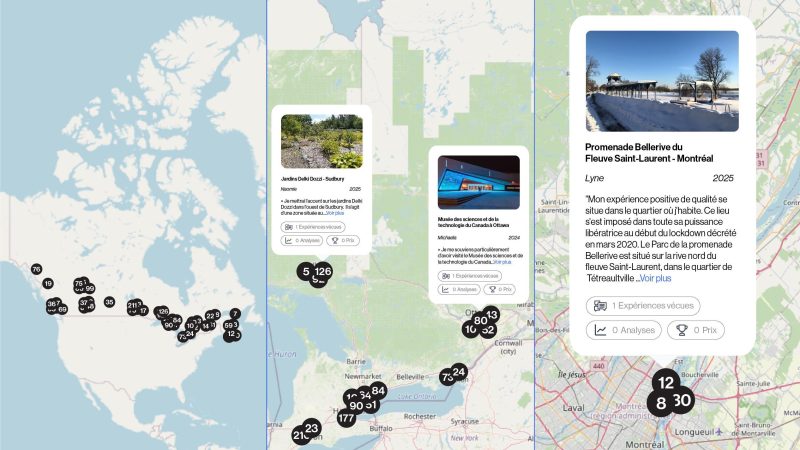
Using filters, ArchiQualiData reveals more than 4,000 award-winning projects with links to design and architecture firms and agencies, as well as a map-based tracking system.
You can also discover an initial collection of more than 160 “positive experiences of quality” that provide a better understanding of what users and citizens feel and appreciate in public places (some award-winning, some lesser known, but always worth discovering), whether they are buildings or public spaces.
Finally, month after month, visitors will discover all the case studies, analyses, action plans, conferences, courses, and round tables, as well as, perhaps most importantly, roadmaps toward a more equitable, inclusive, and socially valuable quality. The ArchiQualiData platform is powered by researchers, students, and professional and social partners brought together in the Canada-wide SSHRC Partnership on Quality under the scientific direction of Professor Chupin.
Enjoy your discovery and, above all, learn to share your own experience of quality so that disciplines, professions, and decision-makers can think about and produce the built environment beyond silos and habits, in increasingly inclusive and sustainable ways.
Letʼs build a map of Canadaʼs public buildings and places that incorporates your own experience of quality!
Why does your experience matter to improve quality?
Our buildings, parcs and cities are still designed and based on visions that poorly consider the diverse experiences of the public. By informing decision-makers,students and designers, your voice can help make public buildings and places more inclusive, more valuable and more sustainable.
3 ways to contribute:
📷 Take a picture showing what you like in a public building or public space, along with a short description (300 words).
🎤 Record a voice message on your phone while experiencing the place you like and take a picture.
🎥 Take a short video and record your voice describing the place you like and take a picture.[vc_single_image image="27105" img_size="large" onclick="custom_link" img_link_target="_blank" css="" link="https://archiqualidata.ca/en?filters="]

EVENTS
Exposition itinérante du travail en cours sur les feuilles de routes élaborées par 15 équipes intersectorielles d’un océan à l’autre
EVENTS
The ArchiQualiData database provides analyses and studies of exemplary and award-winning living environments, real-life experiences and case studies.
DISCOVER detailed studies conducted by researchers, providing unique insights into exceptional buildings and places.
ACCESS testimonials from people who have directly interacted with these entities, enriching understanding through authentic stories.
FIND precise information on each exemplary entity, thanks to a simple interface and advanced search system.
PUBLICATIONS
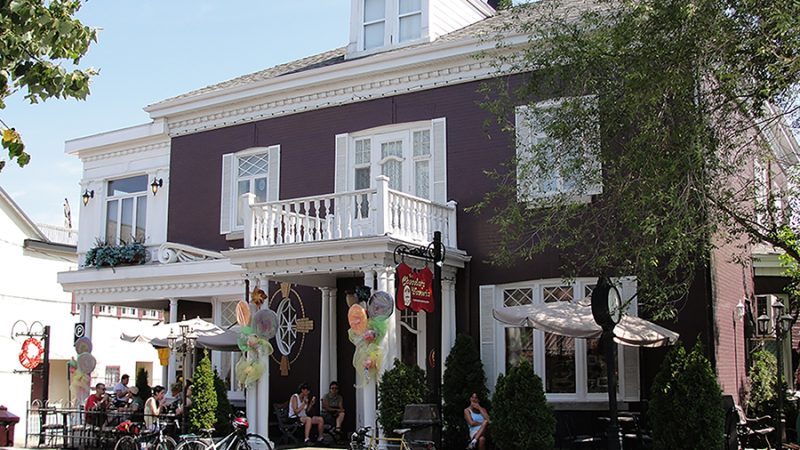
New article published in Le Devoir by Yolene Handabaka Ames, student of the individualized doctorate in architecture at the École d'architecture de la Faculté de l'aménagement: What's behind the demolition of Chocolats favoris' building in Vieux-Lévis?
"The case of the imminent demolition of Chocolats favoris has been making headlines since October 2023, when a public notice of demolition request from the City of Lévis was posted on the building's façade.
The saga, which lasted almost two years, revealed recurring conservation issues surrounding Quebec's built heritage. So much so that the Lévis residence has become an emblematic case of what lies behind most heritage building demolition projects: the social value of a “living” heritage.
In autumn 2022, the house that had housed Chocolats favoris since 1996 was closed due to water infiltration and deteriorating masonry. After professional appraisals, letters signed by heritage advocates, requests for review and the active participation of Lévis residents at public hearings, demolition was approved on December 16. A request for a one-year moratorium did not change the building's fate either. On June 19, at a regular meeting of the municipal council, elected officials voted against accepting the request. The house of Chocolats favoris will soon fall under the demolition pick... "
Read more on Le Devoir’s website.
Photo by René Bélanger (Flickr).

PUBLICATIONS
The City of Montreal has selected the Canada Research Chair in Architecture for research on the lived experience of quality by users of public buildings.
Jean-Pierre Chupin, Bechara Helal and Carmela Cucuzzella will develop a protocol for collecting lived experiences with doctoral students: Firdous Nizar, Paloma Castonguay-Rufino, Yolene Handabaka, Shantanu Biswas Linkon, Cyrille Tchango Ngamaleu of the Individualized PhD in Architecture program.
The proposal from the Canada Research Chair in Architecture, Competitions and Mediations of Excellence (CRC-ACME) team was selected in Stream 1 of the call “Developing a Stronger Design Culture, Together – 2nd Edition” (Call for Proposals 2023-2024).
Project: Protocol for investigating and qualitatively assessing the social value of public buildings through the collection of lived experiences by users
Description: Post-occupancy quality assessment protocol providing methods for collecting and analyzing testimonials about the experience of municipal sites and buildings, and creating a collection of stories and records of remarkable lived experiences. The aim is to gain a better understanding of the factors that influence the quality of the experience of municipal sites and buildings.
The project will enrich the strategies and actions for sustaining quality presented in the Quality Toolkit Design Montréal (section Quality Vision).
It will also contribute to achieving the results of the Montréal 2030 strategic plan, particularly with regard to the following priority:
Priority 19 – Provide all Montrealers with safe, quality living environments and a local response to their needs.
To learn more: https://designmontreal.com/trousse/la-qualite-ca-se-vit-au-quotidien
For more information on the program of Design Montréal:
https://designmontreal.com/appels/developper-ensemble-une-plus-forte-culture-du-design-edition-2?section=3948
Consult the complete report: https://designmontreal.com/s3fs-public/2025-05/protocole-valeur-sociale_udem.pdf?VersionId=wAorph2CDytrmoi-T9vjUZthx9Znz-Z

EVENTS
Toronto 2025 Convention Program : Toward a White Paper on Quality...
The final program for the 2025 Annual Convention is now available. From April 30 to May 2 in Toronto, the event will bring together experts, researchers, and practitioners to advance a national strategy for quality in Canada’s built environment. We are happy to share with you this program and hope you are as excited as we are for those great speakers, roundtables discussions and site visits that will take place during the convention.
Jean-Pierre Chupin, PhD, Professor, Architect MOAQ, MIRAC. Holder of the Canada Research Chair in Architecture, Competitions and Mediations of Excellence at Université de Montréal and Principal Investigator of the SSHRC Research Partnership on Quality in Canada’s Built Environment.

EVENTS
Conference by Léa-Catherine Szacka , University of Manchester
Date: Tuesday, April 1st at 5:30 pm.
Location: Amphitheatre 1120, Faculté de l’aménagement, Université de Montréal
Lecture series of the Laboratoire d’étude de l’architecture potentielle
Crossed Histories
Phyllis Lambert, Ada Louise Huxtable and Gae Aulenti on architecture and the city
Summary:
Born in the 1920s, architects Gae Aulenti and Phyllis Lambert and critic Ada Louise Huxtable were among the most influential figures in post-war architecture and design. Pioneers in a largely male-dominated field at the time, and key players in the transition from modernism to postmodernism, they set out to conquer and shape public space. This talk retraces the history and careers of these three women, who are the focus of the exhibition Crossed Histories, presented until May 2025 at the Canadian Cultural Centre in Paris.
Léa-Catherine Szacka:
Senior Lecturer (Associate Professor) in Architectural Studies, University of Manchester
Director of the Manchester Architecture Research Group (MARG)
Vice-President, European Architectural History Network (EAHN)
Co-Founder, PASZA - Platform for Architectural Research
PEOPLE
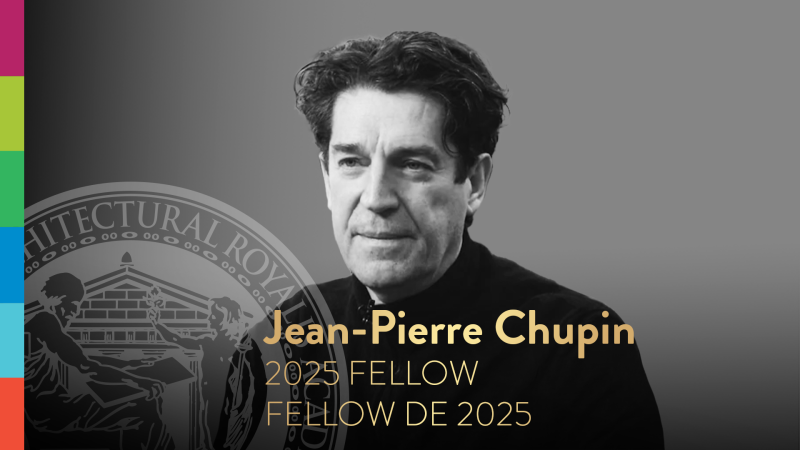
Professor Chupin was nominated by Thierry Montpetit, FRAIC, and letters of support were submitted by five renowned Quebec architects: Anik Shooner, FIRAC, Nathalie Dion, FIRAC, Gilles Prud'homme, FIRAC, Maxime Frappier, FIRAC, and Renée Daoust, FIRAC, in the category of : Outstanding scholarly contributions supported by research, publications or teaching in the field of architecture, and, Outstanding contributions to the profession fostering excellence in architectural practice through leadership in public service or industry organizations.
Fellows will be formally inducted into the RAIC College on Tuesday, June 3, 2025 at an induction ceremony held in conjunction with the RAIC Conference on Architecture in Montreal, Quebec.
Visit the RAIC website to see the 43 new Fellows 2025.

EVENTS
“From business districts almost exclusively reserved for commercial and professional activities, Canadian downtowns are increasingly becoming living spaces. Yet there are few elementary schools, which are essential to inclusive urban development. And for good reason: the traditional model of the single-purpose, low-rise school building, with a large playground at ground level, is at odds with a high-density, high-value environment. The heart of metropolises attracts developers, all the more so as urban planning regulations allow them to erect high-rise buildings, a source of significant revenue. So what kind of school architecture can we imagine for our city centers? And what might it offer schoolchildren?”
- A. Cormier, A. Paré and G. Adamczyk, En centre-ville : une architecture à hauteur d'enfant, Potential Architecture Books, Montreal, 2024
The Laboratoire d'étude de l'architecture potentielle (LEAP) recognizes the importance of the stakes involved in building schools downtown, and held a round table on this theme to mark the launch of the book En centre-ville : une architecture à hauteur d'enfant.
Moderator
Jean-Pierre Chupin, Architect and Professor at the School of Architecture, Université de Montréal, Chair Holder of the Canada Research Chair in Architecture, Competitions and Mediations of Excellence and Director of the LEAP
Panelists
Robert Beaudry, Montréal city councillor, Member of the Executive Committee, Responsible for OCPM urban planning and homelessness
Carol Bélanger, Chief Architect, City of Edmonton
Anne Cormier, Architect, Professor at the School of Architecture, Université de Montréal, Researcher at the LEAP
Ève Desrosiers, Architect, Héloïse Thibodeau architecte
Maryse Laberge, Architect, nfoe
Claude Laurin, Architect, Real Estate Planning and Development Coordinator, Centre de services scolaires de Montréal
Jordan Owen, Junior Developer, Mondev
The round table is supported by the Social Sciences and Humanities Research Council of Canada (SSHRC), the Vice-rectorat à la recherche, à la découverte, à la création et à l'innovation de l'Université de Montréal (VRRCDI) and the Laboratoire d'étude de l'architecture potentielle (LEAP).[vc_video link="https://vimeo.com/1011071339/907b73b83c" css=""]


PUBLICATIONS
This book provides an in-depth exploration of the rich and persistent use of analogical thinking in the built environment. Comparing views on the role of analogies and metaphors by prominent voices in architecture and related disciplines from the 17th century to the present, the book shows how the “analogical world of the project” is revealed as a wide-open field of creative and cognitive interactions.

PUBLICATIONS
On the occasion of accessibility week at the Senate, La Presse echoes the research coordinated by researchers from the Université de Montréal who are members of LEAP and the SSHRC partnership on quality.
Click here to read the article.
SCIENCE BLOG
ARCHITECTURAL COMPETITIONS, PROMOTION OF EXCELLENCE AND CRITICISM OF OUR INSTITUTIONS: THE ROLE OF THE RAIC THROUGHOUT HISTORY
October 21 2024 / Samuel Dubois (Doctorant)
IN THE ARCHIVES OF JACQUES FOLCH-RIBAS, QUEBEC ARCHITECT WINNER OF NUMEROUS LITERARY PRIZES
December 12 2023 / Lucie Palombi (Doctorante)
ABOLISHING AWARD CATEGORIES GUARANTES NEITHER FAIRNESS NOR OPENNESS
September 27 2023 / Annie Thao Vy Nguyen (Étudiante) + Jean-Pierre Chupin, Ph.D.