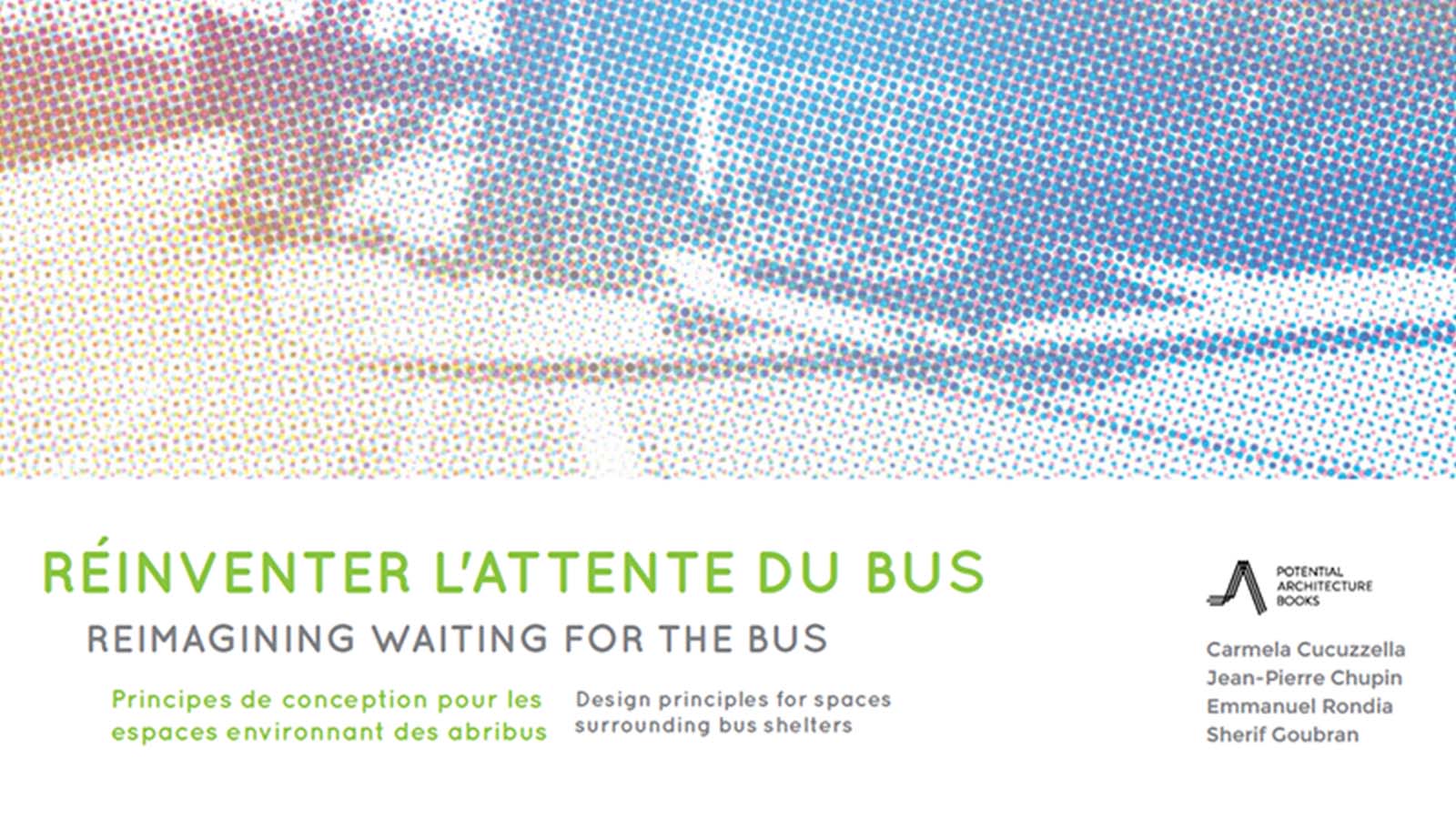
Réinventer l’attente du bus (Principes de conception pour les espaces environnant les abribus), un ouvrage en libre accès de Carmella Cucuzella, Jean-Pierre Chupin, Emmanuel Rondia et Sherif Goubran / Reimagining Waiting for the Bus (Design principles for spaces surrounding bus shelters), an open access book by Carmella Cucuzella, Jean-Pierre Chupin, Emmanuel Rondia and Sherif Goubran

Reimagining Waiting for the Bus is an open access book edited by Carmela Cucuzzella, Jean-Pierre Chupin, Emmanuel Rondia and Sherif Goubran published by Potential Architecture Books (Montreal, 2021).

This creative guide, the result of an international competition, is a synthesis of the best ideas in the form of a free resource aimed at stimulating citizen discussion and community group engagement around the improvement of small urban environments connected to bus stops.

This richly illustrated, educational guide presents ideas that encourage appreciation of urban spaces by emphasizing the importance of nature, art and design. Reimagining Waiting for the Bus invites citizens to think about creative approaches, neighborhood by neighborhood, bus stop by bus stop, that would energize these public spaces in an interactive, poetic, critical and meaningful way: shifting the immediate environment of bus stops from a merely functional spatiality to a multi-purpose spatiality.

This is not about redesigning the bus shelter, but about making waiting for the bus more pleasant, in various ways, encouraging citizens to use the bus instead of their car, all year round, including during hot summer days and long periods of freezing winter.

The ideas extracted from projects from many countries are not presented as solutions but as illustrated principles gathered in 5 vectors going from culture to social dimensions, from ecological concerns to technological innovations and, in general, to everything that can increase the feeling of well-being.

The result of a research and creation process, this guide aims to encourage citizens to take hold of these often neglected spaces in which waiting should be given all the attention necessary to enhance public transport.

REFERENCE:

Cucuzzella, C., Chupin J.-P., Rondia, E., Goubran, S., (2021), Reimagining Waiting for the Bus, Montréal, Potential Architecture Books, 139 pages. ISBN 9781988962054
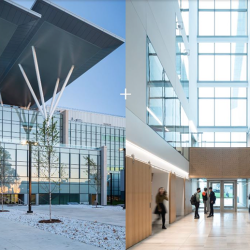
Three Types of Architectural Educational Strategies (AES) in Sustainable Buildings for Learning Environments in Canada, an article by Jean-Pierre Chupin, Morteza Hazbei and Karl-Antoine Pelchat

This article explores a trend provisionally called “eco-didacticism” observable for nearly 15 years in art, design and architecture. The corpus concentrates on learning centres as buildings meant to diffuse advanced knowledge in the field of sustainable architecture. We found evidence of additional educational intentions to the pedagogical or scientific programs that these buildings have already been mandated to host and support. A variety of practices or devices have sometimes been added to the architecture, sometimes integrated, while others determine the overall structuring of these educational buildings. Seven cases of “learning centres” built in Canada between 2004 and 2018 have been screened through three epistemological filters distinguishing forms of “architectural didactics”: 1—a labeling often quantitative approach, 2—an experiential or practical approach, 3—a visually narrative or iconic approach. While outlining definitions of these Architectural Educational Strategies (AES), we offer initial explanations for their distinctive features. It appears that architects, designers and critics altogether operate on the belief that forms of architectural communication can operate as elements of a language that would be accessible to non-experts. Our conclusion indicates how future research could question the very possibility of giving lessons through formal language and aesthetic features.

REFERENCE:

Chupin, J. P., Hazbei, M., & Pelchat, K. A. (2021). Three Types of Architectural Educational Strategies (AES) in Sustainable Buildings for Learning Environments in Canada. Sustainability13(15), 8166. https://doi.org/10.3390/su13158166

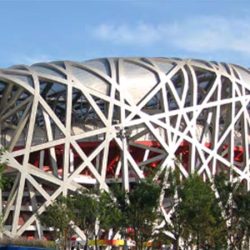
This is Not a Nest: Transcultural Metaphors and the Paradoxical Politics of International Competitions, an article by Jean-Pierre Chupin published in the Footprint, Delft Architectural Theory Journal

Although the architecture competition has been analysed through a number of rhetorical lenses, the recurring production of transcultural metaphors, particularly in international competitions, remains to be addressed as a genuine disciplinary phenomenon. The hypothesis of competitions as contact zones is particularly appropriate for the study of international events, in which competitors forge broad analogical figures to bridge cultural differences. Recent studies in the cognitive understanding of analogical matrices have considerably reinforced the theories on metaphors. Our analytical grid characterizes analogical matrices to identify levels of symbolic operations through the differentiation of formal, structural and conceptual analogies. We first dig into a sample of competition projects nicknames (Crystal, Birds’Nest, DNA, Cloud, Lace, Stealth, etc.) to confirm that these tropes have a paradoxical status at the intersection of architects’ intents and the public expectations. We then summarize an in-depth hermeneutical discourse analysis of 40 North American international competitions. This indicates a fourfold series of expectations to which competitors hope to provide answers in an international ‘conflict of interpretations’. Adhering to the theory of speech acts, we suggest that performative metaphors in competitions appear less as indicators of designers’ intentions than as products of the broader context surrounding competitions themselves. We conclude with a proposed grid indexing four types of contact zones in which metaphorical relationships are actively created and not just repeated.

REFERENCE:

Chupin J.-P., This is Not a Nest:Transcultural Metaphors and the Paradoxical Politics of International Competitions, in Footprint, Delft Architectural Theory Journal, #26, Vol. 14. #1 Spring 2020, pp. 63-82.
https://doi.org/10.7480/footprint.14.1.3835

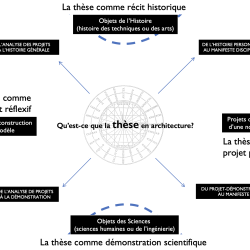
Dans l’univers des thèses, un compas théorique. Un article de Jean-Pierre Chupin publié dans les cahiers de la recherche architecturale et urbaine / In the universe of theses, a theoretical compass. An article by Jean-Pierre Chupin published in the cahiers de la recherche architecturale et urbaine

This article presents a mode of orientation in the variety of objects and the tumult of definitions of the architecture thesis. A doctoral colloquium on the return of ornament in contemporary practices, in May 2013 at the University of Montreal, confirmed, if confirmation were needed, that the same questioning could give rise to a surprising heterogeneity of epistemological aims 1. A comparison of twelve approaches from major North American, European, and South American schools, made it possible to outline and test a first version of a mode of categorization of theses. In September 2013, this model was put to the test of the sixty or so texts selected for the second « Rencontres doctorales en architecture » at the École nationale supérieure de Paris-Belleville. This « compass of theses and theoretical aims » must however be understood as a hypothesis subject to epistemological debate.

REFERENCE:

Jean-Pierre Chupin, « Dans l’univers des thèses, un compas théorique », Les Cahiers de la recherche architecturale et urbaine [En ligne], 30/31 | 2014, mis en ligne le 14 septembre 2017, consulté le 16 octobre 2021.
URL : http://journals.openedition.org/crau/370 ; DOI : https://doi.org/10.4000/crau.370

Rapports sur les tables rondes produits par les étudiant·e·s. Première convention annuelle, Montréal, Août 2022. CRSH Partenariat de recherche (#895-2022-1003). Sous la direction de Jean-Pierre Chupin, 2023, Université de Montréal. 121 pages.

TABLE DES MATIÈRES

Pôle 1 : Justice spatiale et amélioration de la qualité de vie 4

Table ronde 1 – TorontoMet & McGillU & DalhousieU & UToronto – 25 août am   4

Table ronde 2 – TorontoMet & McGillU & DalhousieU & UToronto – 25 août pm   11

Table ronde 3 – TorontoMet & McGillU & DalhousieU & UToronto – 26 août         20

Pôle 2 : Résilience intégrée, culture matérielle et réutilisation adaptative 27

Table ronde 1 – LaurentianU & CarletonU & UWaterloo– 25 août   27

Table ronde 2 – LaurentianU & CarletonU & UWaterloo– 25 août   36

Table ronde 3 – LaurentianU & CarletonU & UWaterloo– 26 août   42

Pôle 3 : Conception inclusive pour la santé, le bien-être, le vieillissement et les besoins spéciaux           47

3a – Table ronde 1 – ConcordiaU & UCalgary – 25 août         47

3a – Table ronde 2 – ConcordiaU & UCalgary – 25 août         55

3a – Table ronde 3 – ConcordiaU & UCalgary – 26 août         64

3b – Table ronde 1 – UCalgary & UMontréal – 25 août          72

3b – Table ronde 2 – UCalgary & UMontréal – 25 août          80

3b – Table ronde 3 – UCalgary & UMontréal – 26 août         89

Pôle 4 : Processus et politiques de soutien à la réinvention des environnements bâtis     96

Table ronde 1 – AthabascaU & ULaval & UManitoba – 25 août        96

Table ronde 2 – AthabascaU & ULaval & UManitoba – 25 août        101

Table ronde 3 – AthabascaU & ULaval & UManitoba – 26 août        109

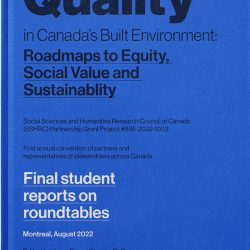
Final Student Reports on Roundtables. First Annual Convention, Montreal, August 2022. SSHRC Research Partnership (#895-2022-1003). Edited by Jean-Pierre Chupin, 2023, Université de Montréal. 114 pages.

TABLE OF CONTENTS

Cluster 1: Spatial justice & heightened quality of life           4

Roundtable 1 – TorontoMet & McGillU & DalhousieU & TorontoU – August 25 am 4

Roundtable 2 – TorontoMet & McGillU & DalhousieU & TorontoU – August 25 pm            11

Roundtable 3 – TorontoMet & McGillU & DalhousieU & TorontoU – August 26 am 19

Cluster 2: Integrated resilience, material culture & adaptative reuse         26

Roundtable 1 – LaurentianU & CarletonU & UWaterloo – August 25 am    26

Roundtable 2 – LaurentianU & CarletonU & UWaterloo – August 25 pm     34

Roundtable 3 – LaurentianU & CarletonU & UWaterloo – August 26 am     40

Cluster 3: Inclusive design for health, wellness, aging & special needs       45

3a – Roundtable 1 – ConcordiaU & UCalgary – August 25 am           45

3a – Roundtable 2 – ConcordiaU & UCalgary – August 25 pm           52

3a – Roundtable 3 – ConcordiaU & UCalgary – August 26 am           61

3b – Roundtable 1 – UCalgary & UMontréal – August 25 am            69

3b – Roundtable 2 – UCalgary & UMontréal – August 25 pm            76

3b – Roundtable 3 – UCalgary & UMontréal – August 26 am            85

Cluster 4: Processes & policies supporting the re-invention of built environments           92

Roundtable 1 – AthabascaU & ULaval & UManitoba – August 25 am           92

Roundtable 2 – AthabascaU & ULaval & UManitoba – August 25 pm           96

Roundtable 3 – AthabascaU & ULaval & UManitoba – August 26 am           103

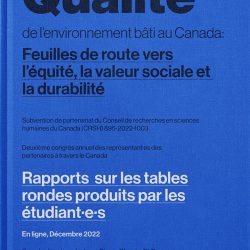
Rapports sur les tables rondes produits par les étudiant·e·s. Deuxième convention annuelle, en ligne, Décembre 2022. Partenariat de recherche du CRSH (#895-2022-1003). Sous la direction de Jean-Pierre Chupin, 2023, Université de Montréal. 71 pages.

Table ronde 1a – UCalgary & UToronto & DalhousieU – 1 déc         6

Table ronde 1b – UCalgary & UToronto & DalhousieU – 2 déc        11

Table ronde 2a – AthabascaU & UBC & ConcordiaU – 1 déc            18

Table ronde 2b – AthabascaU & UBC & ConcordiaU – 2 déc            28

Table ronde 3a – UManitoba & UMontréal & TorontoMet – 1 déc  38

Table ronde 3b – UManitoba & UMontréal & TorontoMet – 2 déc 42

Table ronde 4a – LaurentianU & ULaval – 1 déc       48

Table ronde 4b – LaurentianU & ULaval – 2 déc       55

Table ronde 5a – McGillU & CarletonU & UWaterloo – 1 déc          60

Table ronde 5b – McGillU & CarletonU & UWaterloo – 2 déc          66

Final Student Reports on Roundtables. Second Annual Convention, Online, December 2022 SSHRC Research Partnership (#895-2022-1003). Edited by Jean-Pierre Chupin, 2023, Université de Montréal. 69 pages.

Roundtable 1a – UCalgary & UToronto & DalhousieU – Dec 1         6

Roundtable 1b – UCalgary & UToronto & DalhousieU – Dec 2        10

Roundtable 2a – AthabascaU & UBC & ConcordiaU – Dec 1            16

Roundtable 2b – AthabascaU & UBC & ConcordiaU – Dec 2            25

Roundtable 3a – UManitoba & UMontréal & TorontoMet – Dec 1  34

Roundtable 3b – UManitoba & UMontréal & TorontoMet – Dec 2 37

Roundtable 4a – LaurentianU & ULaval – Dec 1       42

Roundtable 4b – LaurentianU & ULaval – Dec 2       48

Roundtable 5a – McGillU & CarletonU & UWaterloo – Dec 1          53

Roundtable 5b – McGillU & CarletonU & UWaterloo – Dec 2          59